
AI costs too much to run. We fix that.
cortave is the efficiency layer between your
AI apps and your model providers.
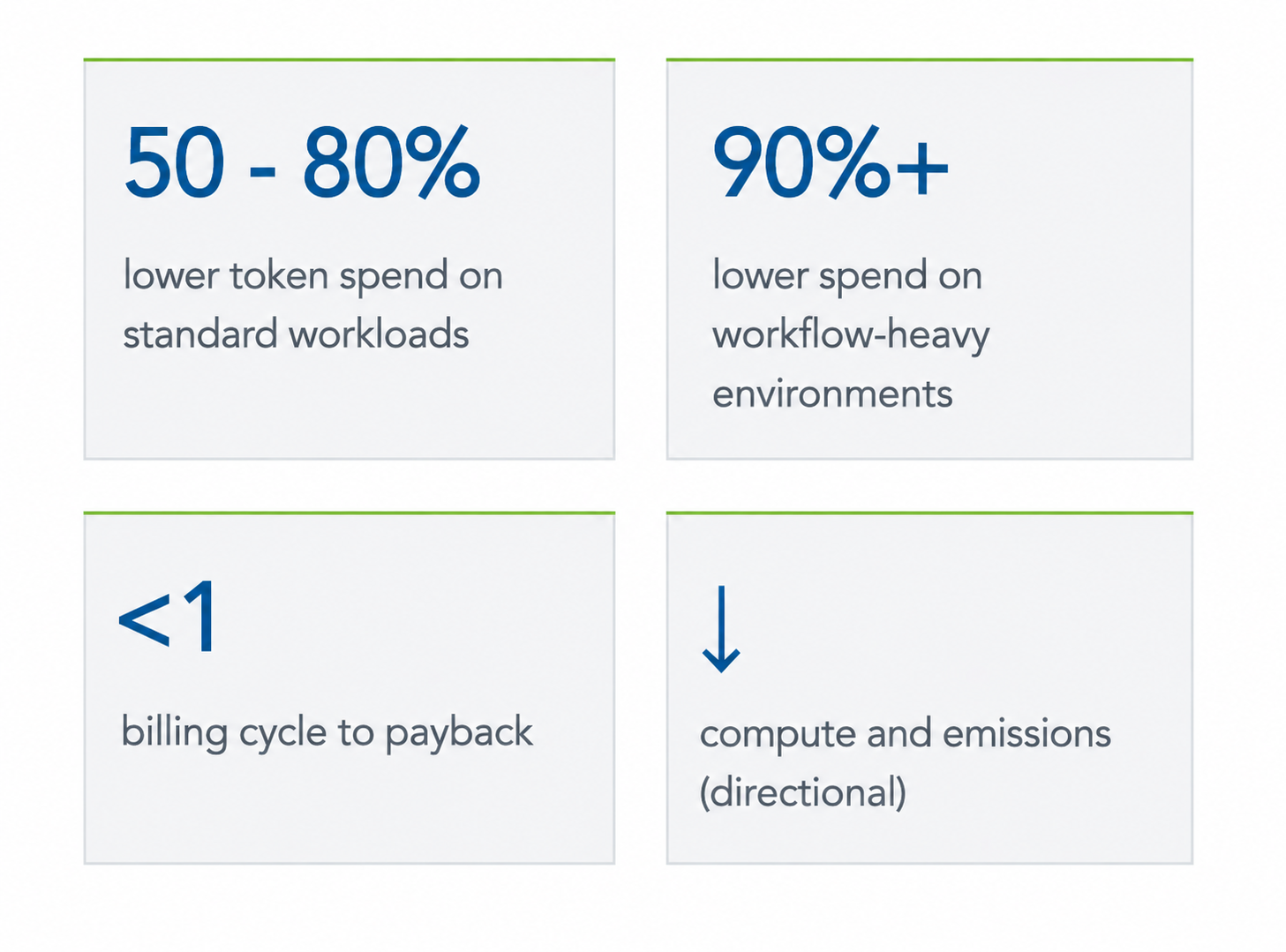
Same intelligence. 50 – 80% lower token spend.
50 – 80% average token reduction spend
〰️
90%+ in workflow heavy environments
〰️
no model lock-in
〰️
50 – 80% average token reduction spend 〰️ 90%+ in workflow heavy environments 〰️ no model lock-in 〰️
AI inference is the new cloud bill.
Nobody is governing it.
Most enterprise AI spend goes to premium models running low complexity work. There’s no routing, no policy, no attribution. Just a meter running faster each quarter.
The numbers, from current enterprise deployments:
20- 40% margin compression on AI-powered products
30 - 60% budget volatility quarter to quarter
30 - 50% of token spend on redundant inference
Cloud had the exact same problem ten years ago. FinOps fixed it. AI inference is overdue.
What our customers say:
"We integrated cortave because the economics of AI delivery were becoming a constraint on what we could offer clients. The cost reductions are significant, but what impressed us equally was the quality improvement. When inference is governed properly, the AI performs better. We are now building cortave into every solution we ."
Robert Pop, Head of AI, WE AS WEB
Built for the people who own the bill. Different roles. Same problem. Same fix.
For the CFO
Predictable infrastructure spend. Gross margin protected as usage scales. Inference becomes a line item you can forecast. cortave reduces token spend by 50–80%, with a payback period typically inside one billing cycle. You only pay us when we save you money.
For the CTO/CISO
Routing, observability, governance, and cost control. One infrastructure layer. cortave is self-hostable, model-agnostic, and SOC 2 Type II. Sits inside your VPC if you want it to. No data leaves your perimeter. No vendor lock-in on the model side.
What changes when you turn it on?
Same product, same outcome, smaller bill. Across current cortave deployments, here's what shifts in the first 30 days.
One layer. Three jobs.
cortave sits between your AI apps and the LLMs. It works with every major model provider. You don't rewrite anything.
-
Every call goes to the model best suited to the task. Simple prmpts to small models . Complex reasining to premium ones. You set the policy. cortave forces it on every request.
-
Caps, caches, and compression applied automatically. Repeated questions return cached answers. Bloated prompts get trimmed. Runaway agents hit a ceiling before they hit your budget.
-
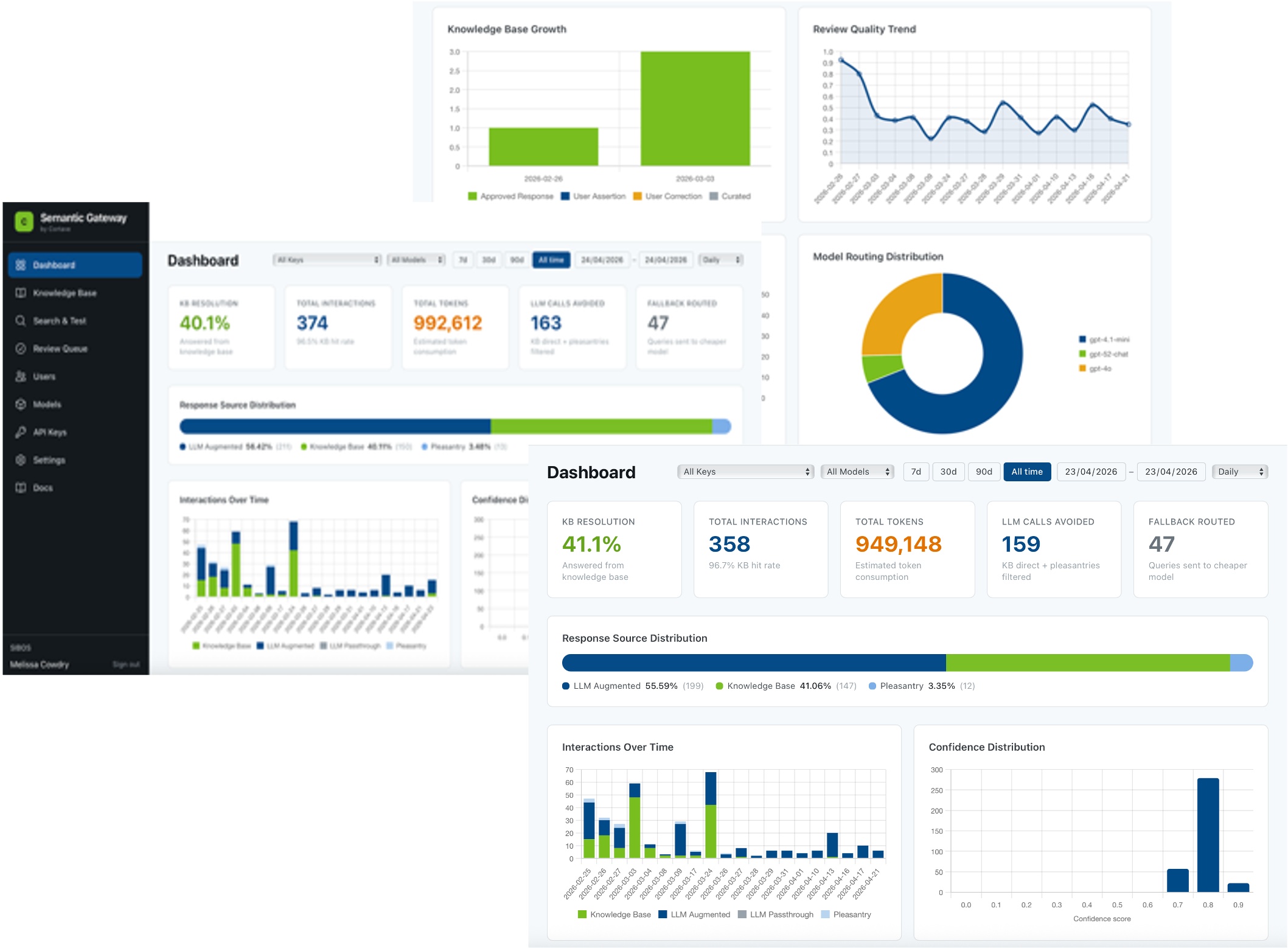
Every token tied to a workflow, a team, a customer. Finance and Engineering looking at the same dashboard. No more guessing where the bill came from.
For FinOps & Cloud Finance
The FinOps layer for AI inference. Same discipline you applied to cloud, applied to inference. Per-team, per-workflow, per-customer attribution. Forecasts that hold up. Anomaly alerts when a runaway agent burns through a budget.
For Platform & Engineering
Stop premium models from doing trivial work. cortave routes inference at the edge of your stack. Semantic caching, model selection policies, and request-level guardrails. Drop it in front of your existing model providers. No SDK rewrite, no migration.
You only pay when we save you money.
Try cortave free. If your token spend goes down, we take a small cut of the savings. If it doesn't, you don't pay us. That's it.